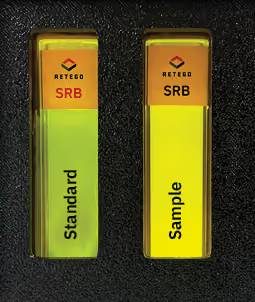
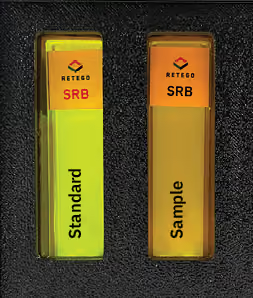
SRB results in 1-24 hours.
Not weeks.

The fastest, most accurate field-deployable sulfate-reducing bacteria assay on the market. Engineered for oilfield use: minimal PPE, rugged sample handling, quantitative results.
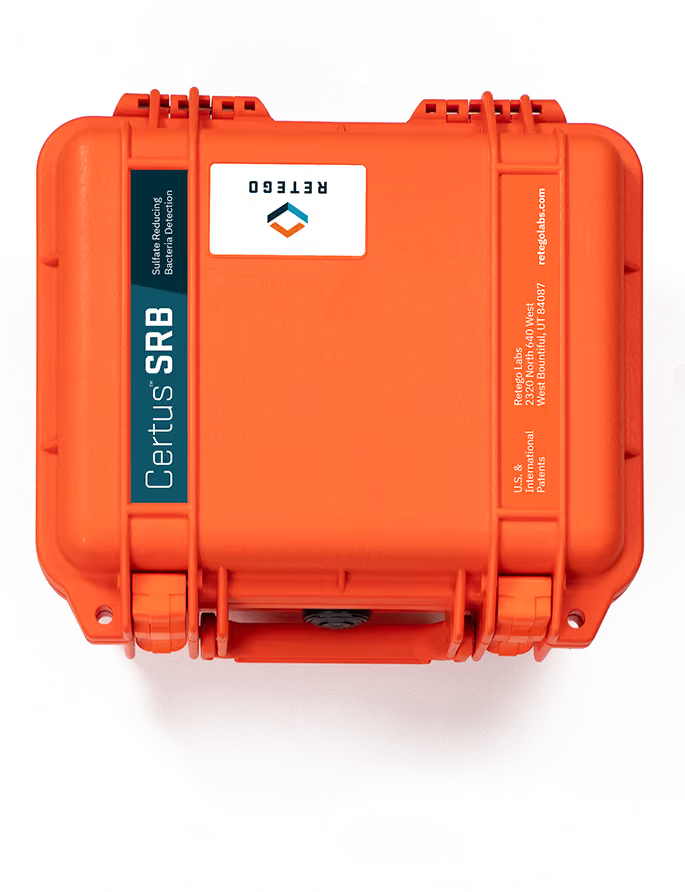
Certus SRB

Detection: quantitative, sulfate reducing bacteria

Result turnaround: 1-24 hours

Sample volume: 3 mL

Sample types: produced water, frac flowback, pipeline samples, industrial process water

PPE: minimal, standard field PPE

Patent protection: Patent Pending in the US and other major markets

Methodology: ASTM-aligned,
peer-reviewed

Questions? send us a message

SRB in oil and gas production

Sulfate-reducing bacteria (SRB) drive a significant share of corrosion damage in oilfield, industrial, and aging municipal water systems. The challenge has never been knowing that SRB causes problems. The challenge has been detecting it fast enough to act.

The traditional API RP 38 serial dilution method takes weeks because it relies on bacterial reproduction in growth media. You literally wait for colonies to multiply enough to register as a positive. qPCR runs faster but reads RNA, not viable organisms, and produces well-documented false positives that have driven millions in unnecessary biocide treatment.

The Retego SRB Detection Kit uses a different approach. The cuvette chemistry detects SRB metabolic activity directly within a 1-24-hour incubation window, and produces a quantitative result. No 28-day wait while the colony doubles. No false positives from non-viable genetic material. No lab. No shipping. No chain of custody.

The presence of SRB, which are found from reservoir to refinery, results in the following:

  • Causes reservoir souring
  • Production of the highly toxic and dangerous hydrogen sulfide (H2S)
  • Microbiologically influenced corrosion (MIC) of piping and equipment
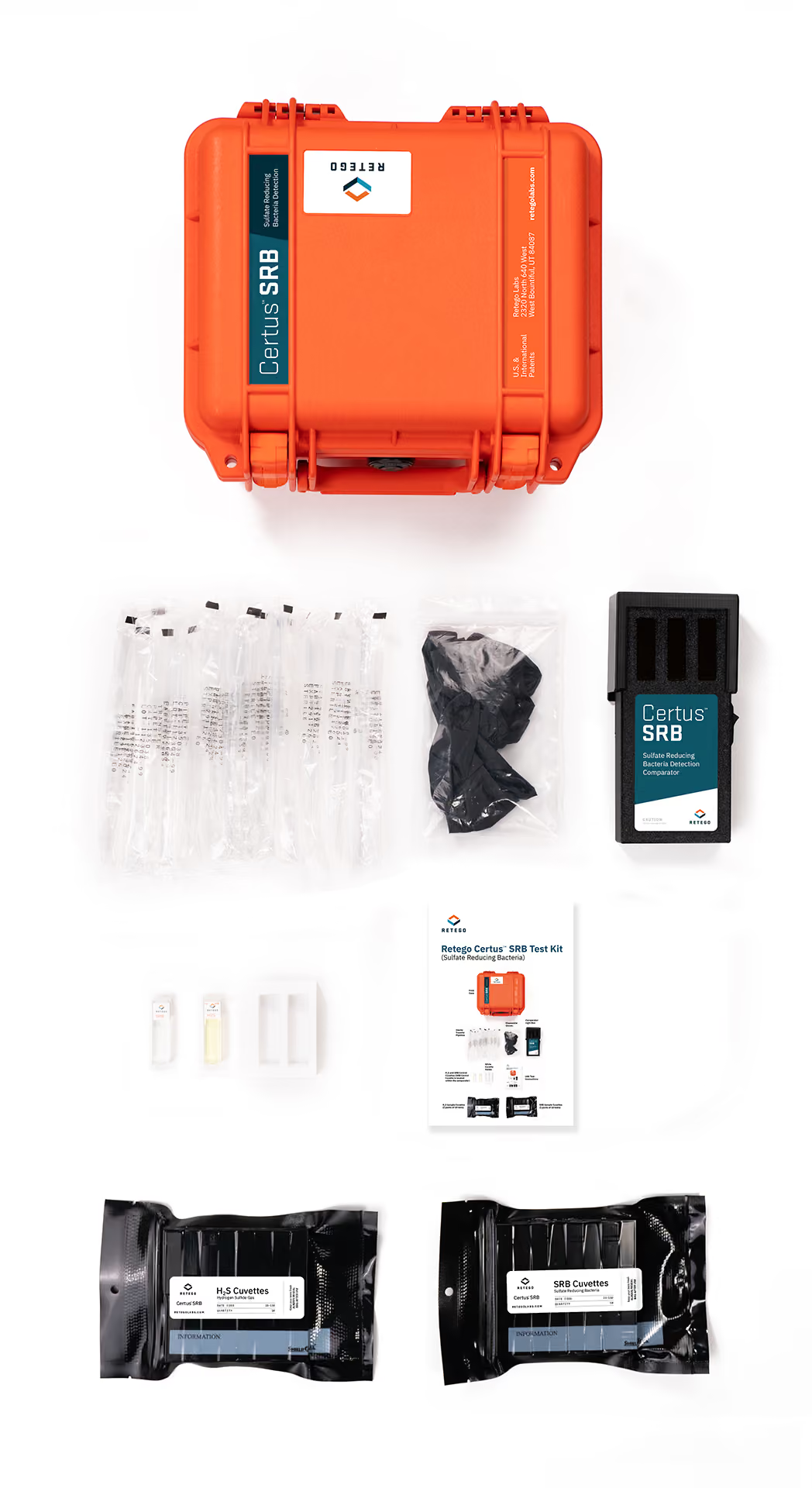
Contents
  • Field Case with Tray
  • 20 Sterile Transfer Pipettes
  • Disposable Gloves
  • Comparator Light Box
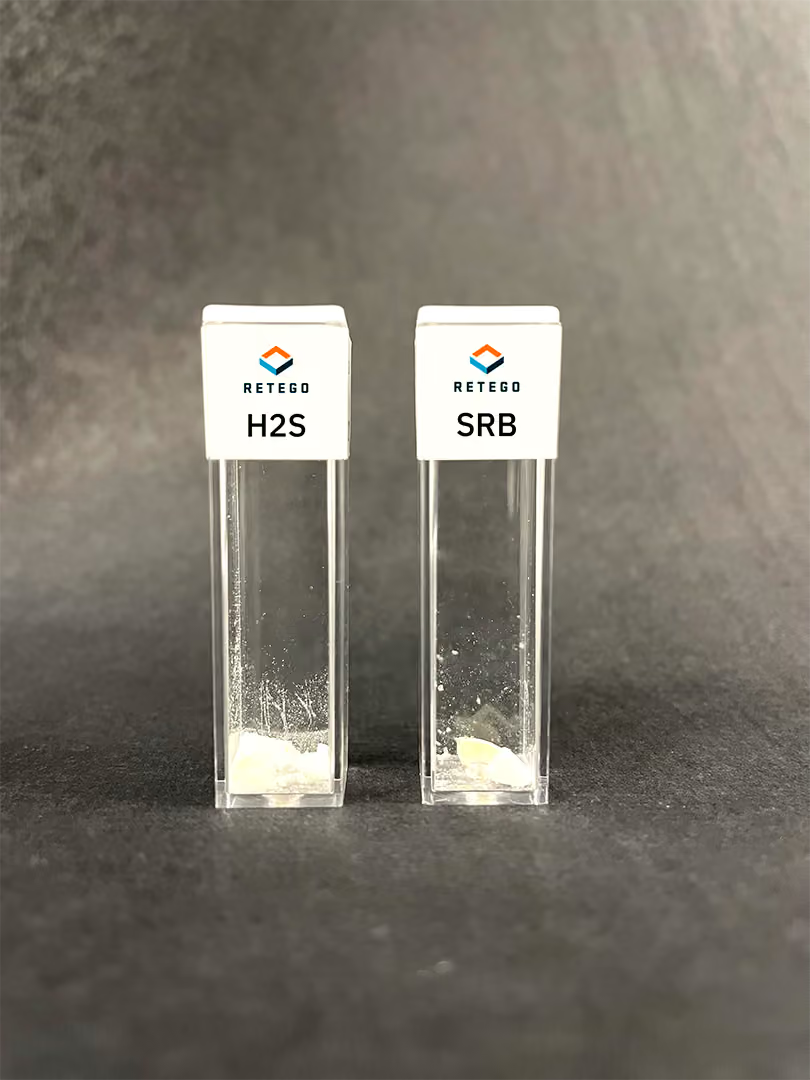
  • SRB Control Cuvette
  • H2S Control Cuvette
  • White Vial Holder
  • Test Instructions
  • 20 SRB Sample Cuvettes
  • 20 H2S Sample Cuvettes

Three real deployments.

Frac flowback
Production runs SRB on twelve flowback samples at the pad. Twenty-four hours later, biocide loading is adjusted by tank. No samples shipped. No 28-day wait.

Pipeline integrity
A pipeline operator tests ferrous iron, sulfide, and SRB at each pig station weekly. Trend data drives a 19 percent biocide spend reduction without elevating MIC risk.

Service company
A regional chemical treatment service runs SRB as part of every customer visit. The conversation about treatment chemistry happens at the wellsite, while the engineer is still on the pad. 

Method
Time to result
Location
Key drawback
Retego Certus SRB
1–24 hours
Field
None significant
API serial dilution
Weeks
Lab
Too slow to inform treatment
ATP
Minutes
Field
Measures total microbial activity, not SRB specifically
qPCR
Hours
Lab
Documented false positives

FAQ

How are SRB quantified?
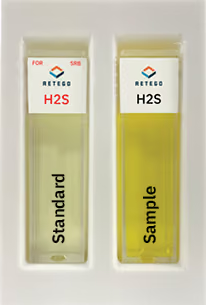
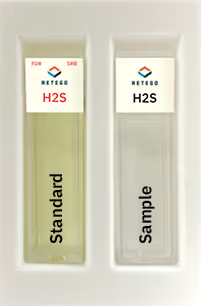
SRB concentration is determined by the time it takes the SRB test to exceed the fluorescence intensity and color of a comparator. A positive result for H2S test is also required to confirm the presence of H2S. The tests are observed at 1, 4, 8 and 24 hours, with the concentration of SRBs estimated by the time taken for the SRB test sample to change color as follows:
  • 0-1 hour≥ 1,000,000 cfu/ml
  • 4 hours ≈ 100,000 cfu/ml
  • 8 hours ≈ 10,000 cfu/ml
  • 24 hours ≈ 1,000 cfu/ml
How long should the test take?
The test should run between one (1) and 24 hours. If the test cuvettes have not turned color after 24 hours, then any SRB present are below the limit of detection of the test.
What type of SRB does the method detect?
The method will detect SRBs that utilize either sulfate (including desulfovibrio) or thiosulfate and ultimately produce H2S.
Does the test detect other bacteria or archaea?
The SRB component of the test can detect other bacteria and archaea (although much more slowly) since the enzyme substrate used may react with other enzymes. However, this happens if the test is left for more than 24 hours, which is why the samples are only observed for 24 hours.
Does the method only detect living SRB?
The method preferentially detects living SRBs, with this effect being more pronounced at lower SRB concentrations.
For a positive SRB result, do both the H2S and SRB test need to be positive?
Yes, both the SRB and H2S tests are required to be positive for the method to definitively predict the presence of SRBs.
How frequently do you need to observe the sample?
The samples should be observed as frequently as practicably possible. Ideally, the samples should be inspected at 1, 4, 8 and 24 hours.
What is included in the Certus SRB?
The Certus SRB contains everything needed to analyze 20 water samples for SRB. The kit contents are itemized above. Additional SRB and H2S test cuvettes are available separately, all tests are packaged in sets of 10.
Where has the SRB test been used to date?
The SRB test has been used to analyze water from potable water supplies in domestic, industrial and commercial facilities in the USA. The method has been used to analyze oilfield waters in throughout the Texas oilfields, Alaska, Egypt, Ecuador and Oman.
What is the weight of the Kit?
Shipping weight 14 pounds or 6 kilograms

Stop waiting 28 days for an answer that should have arrived yesterday.

Order certus srb